
Singapore as a Global Tech Hub: Strengths, Limitations, and the ASEAN Gateway Role
The city-state that became Southeast Asia's nerve center — and what it means for founders building regional technology companies.
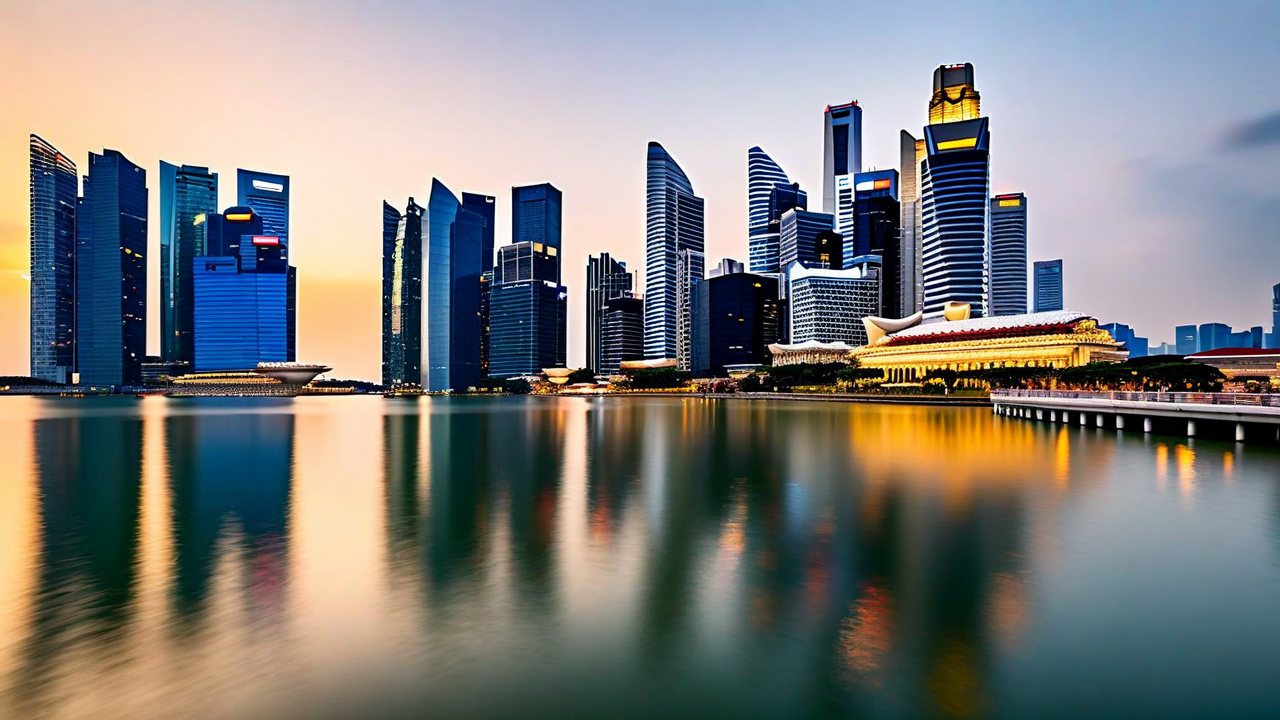
Singapore is, by virtually any measure, the most important node in Southeast Asia's technology ecosystem. It is home to the regional headquarters of most global technology companies operating in Southeast Asia, the primary legal domicile of the vast majority of venture-backed Southeast Asian startups, the largest concentration of venture capital and private equity firms with Southeast Asian mandates, and the most sophisticated financial services regulatory environment in the region. For a country of just under 6 million people, its outsized influence on the regional technology landscape is nothing short of remarkable.
Understanding Singapore's role — its genuine competitive advantages, its strategic limitations, and the complex relationship between its role as a hub and the actual markets where most Southeast Asian technology companies derive their revenue — is essential for anyone trying to build or invest in Southeast Asian technology seriously. This is not a simple story of a single dominant city-state but a nuanced picture of a carefully designed ecosystem that has made specific trade-offs to achieve its position.
What Singapore Does Exceptionally Well
Singapore's competitive advantages are real and substantial. Its legal system — based on English common law with a track record of impartiality and efficiency that is genuinely world-class — provides the predictable contract enforcement and dispute resolution that investors and enterprises require as a prerequisite for significant capital deployment. Singapore courts handle complex commercial disputes faster and with greater sophistication than virtually any other jurisdiction in Asia outside of Hong Kong, and the availability of international arbitration through the Singapore International Arbitration Centre makes it the preferred choice for cross-border contracts involving parties from multiple ASEAN jurisdictions.
The Monetary Authority of Singapore has built a reputation as one of the world's most thoughtful financial services regulators — innovative enough to support fintech experimentation, rigorous enough to maintain the institutional trust that makes Singapore an attractive home for significant financial assets. The MAS's regulatory sandbox program allows fintech companies to test innovative products with real customers under close regulator supervision, providing a path to market that is not available in most other regional jurisdictions. The digital banking licenses issued in 2020 demonstrated a willingness to allow genuine disruption of the incumbent banking sector while managing systemic risk through careful participant selection and ongoing supervision.
Singapore's talent ecosystem is genuinely world-class for the specific functions that technology companies need at their regional headquarters: finance, legal, business development, product management, and strategic leadership. The combination of a strong local university system, an aggressive program for attracting global talent, and decades of experience as a regional hub for multinational corporations has created a labor market that can supply the commercial and operational leadership that scaling technology companies require, often more effectively than any other market in the region.
The Limitations: Small Market, High Cost
Singapore's most significant limitation as a technology ecosystem is straightforward: it is a very small market. With fewer than 6 million people and a high cost of living that dramatically reduces the addressable market for mass-market consumer technology products, Singapore cannot provide the scale of customer base that most technology companies need to prove out their business models before expanding to neighboring markets. A consumer fintech product that achieves 1% penetration of Singapore's addressable market has perhaps 50,000 users. The same penetration rate in Indonesia yields more than 2 million users.
This market size constraint has an important implication for how Singapore-based startups think about their go-to-market strategy. Unlike founders in Indonesia or Vietnam, who can build meaningful scale in their home market before contemplating international expansion, Singapore founders must plan for multi-market operation from a much earlier stage. This is a genuine operational complexity — different regulatory requirements, different payment systems, different consumer behaviors, different languages — that demands more organizational capability and more capital than single-market expansion.
Singapore's high cost structure is the second major limitation. Office space, engineering talent, and commercial leadership all cost significantly more in Singapore than in any other major Southeast Asian market, and these cost disadvantages compound as a startup scales. Companies that build their engineering teams primarily in Singapore are often at a significant cost disadvantage relative to competitors who build engineering capacity in Indonesia, Vietnam, or India, particularly when the engineering work does not require physical presence in Singapore's ecosystem.
The Holding Company Architecture
The practical solution that most sophisticated Southeast Asian technology companies have settled on is a holding company architecture in which the Singapore entity serves as the parent company, housing the intellectual property, the financing vehicles, and the senior leadership, while operating subsidiaries in each country serve the local market and hold the local regulatory licenses. This structure balances Singapore's legal and investor-facing advantages with the operational realities of building businesses that actually serve customers in Indonesia, Vietnam, Thailand, and elsewhere.
Navigating this architecture requires genuine legal and tax expertise that is often underestimated by founders in the early stages of company building. The transfer pricing implications of intellectual property held in Singapore being licensed to operating subsidiaries across ASEAN, the regulatory requirements for maintaining arm's-length transactions between related entities, and the complexity of consolidating financial statements across multiple regulatory regimes all create compliance costs and management complexity that must be factored into the cost of the Singapore-centric structure.
Singapore as Investor Relations Platform
Perhaps the most important practical reason for Singapore-based domicile for Southeast Asian startups is the investor relations function. The concentration of venture capital, private equity, and sovereign wealth fund presence in Singapore — including Temasek, GIC, and the regional offices of most significant global technology investors — makes Singapore-based fundraising dramatically more efficient than fundraising from other ASEAN markets. A founder based in Jakarta or Ho Chi Minh City who wants to raise from a Sequoia Southeast Asia, Vertex Ventures, or Tiger Global will typically need to make regular trips to Singapore for investor meetings. A founder based in Singapore has access to this investor community in a far more organic and less time-intensive way.
The practical value of this proximity should not be underestimated. In venture capital, relationships are built over time through regular informal contact — chance encounters at events, coffee meetings that were not specifically planned to discuss fundraising, the ability to get a quick call with an investor to test a strategic hypothesis. Founders who are geographically close to their potential investors build these relationships more easily and naturally than founders who are geographically distant, and these relationships have real economic value in the form of faster fundraising processes and better terms when the company needs to raise capital.
The Next Generation of Singapore Tech
While Singapore's first generation of technology success stories — Grab, Sea Group, Razer — were predominantly consumer-facing companies, the next generation of Singapore-based technology companies is more diverse. Enterprise SaaS companies targeting Asian multinationals, developer tools companies exploiting Singapore's position as a hub for international technical talent, climate technology companies leveraging Singapore's regulatory sophistication in carbon markets, and digital health companies using Singapore as a test market for products with global ambitions are all emerging as significant categories.
This diversification reflects the maturation of the Singapore ecosystem from a consumer internet hub to a broader technology center with genuine depth across multiple sectors. The next decade of Singapore technology will likely be defined by companies that use the city-state's advantages — regulatory sophistication, legal reliability, global connectivity, institutional capital — to build businesses with genuinely global ambitions rather than simply regional ones.
Key Takeaways
- Singapore's legal system, MAS regulatory framework, and talent ecosystem are genuine world-class competitive advantages for technology companies.
- Market size and cost constraints require Singapore-based founders to plan for multi-market operations from earlier stages than founders in larger markets.
- The Singapore holding company / regional subsidiary architecture balances investor-facing advantages with operational realities of serving ASEAN consumers.
- Proximity to the concentration of venture capital in Singapore provides genuine fundraising efficiency advantages for Singapore-domiciled founders.
- Singapore's next technology generation is more diverse — enterprise SaaS, developer tools, climate tech — reflecting ecosystem maturation beyond consumer internet.