
Digital Payments in Southeast Asia: Infrastructure for a Cashless Future
The payment revolution reshaping commerce and financial access across the region's most dynamic markets.
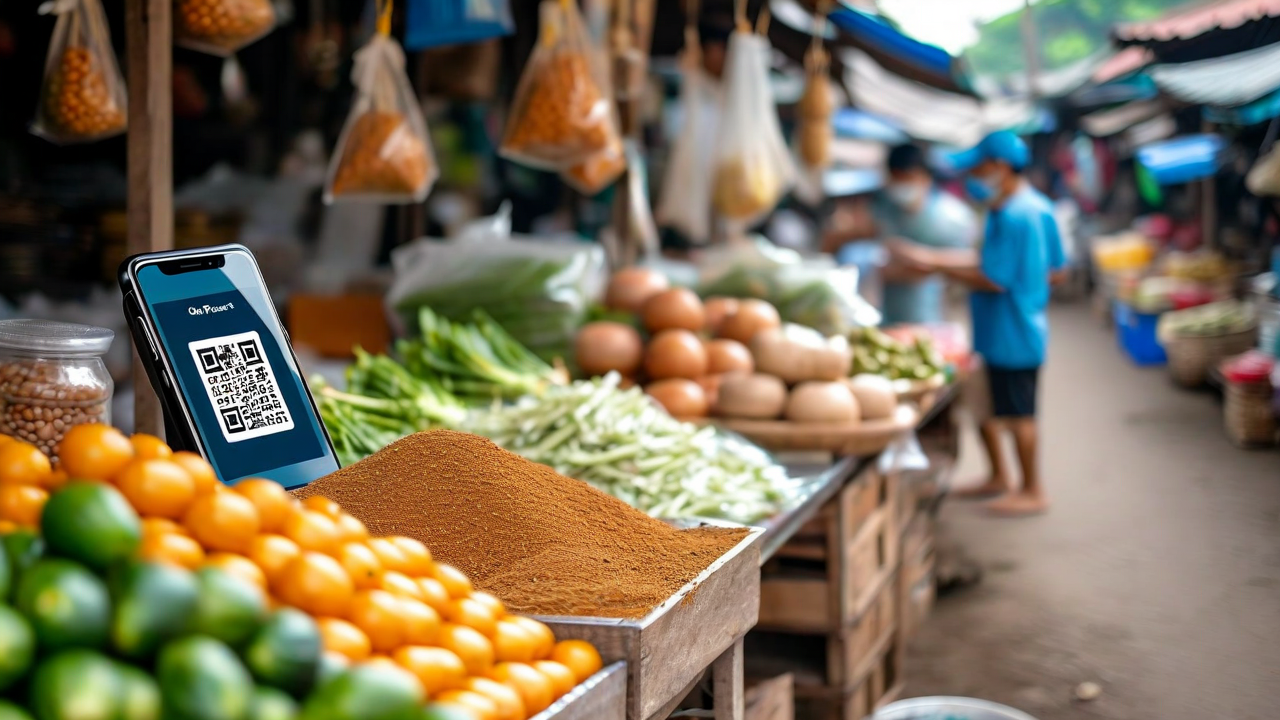
Cash has dominated economic life in Southeast Asia for generations. As recently as 2019, cash accounted for the majority of consumer transactions across most of the region's markets, and the concept of a fully digital payment for everyday goods and services was, for many people, entirely abstract. Within a few short years, driven by a combination of smartphone proliferation, government-led digital infrastructure programs, and the catalyzing effect of the pandemic on consumer behavior, that reality has shifted dramatically. Today, digital payments are not merely an option in Southeast Asian markets — in many contexts, they are becoming the default.
This shift carries profound implications that extend well beyond the convenience of tapping a phone rather than counting notes. Digital payments create a trail of financial data that can be used to underwrite credit, assess insurance risk, and deliver personalized financial products to individuals and businesses that were previously invisible to the formal financial system. In this sense, the payment infrastructure being built across Southeast Asia today is not merely a replacement for cash — it is the foundation for an entirely new financial services ecosystem that could ultimately serve hundreds of millions of people who currently lack meaningful access to banking.
QR Codes: The Unlikely Infrastructure Layer
If there is a single technology that has done more than any other to accelerate digital payment adoption across Southeast Asia, it is the humble QR code. Unlike NFC-based payment systems that require relatively sophisticated hardware at the point of sale, QR codes work with any smartphone camera and can be printed on a piece of paper and taped to a market stall. This low-cost, low-friction approach to payment acceptance has proven enormously effective in markets where the merchant base is dominated by micro and small businesses that cannot afford POS terminals.
Thailand's PromptPay system, launched in 2017, demonstrated what was possible when QR-based payment infrastructure is deployed at national scale with government backing. The system linked bank accounts and digital wallets to national ID numbers and phone numbers, creating a universal payment identifier that any registered user could send money to instantly and at no cost. The adoption curve was steep: within a few years, PromptPay had processed hundreds of billions of baht in transactions and fundamentally changed the way that Thai consumers and small businesses think about moving money.
Indonesia's QRIS (Quick Response Code Indonesian Standard), launched by Bank Indonesia in 2019, took a similar approach with the added ambition of creating a single interoperable QR standard that could be used across all payment providers in the country. This interoperability was crucial: prior to QRIS, a merchant accepting GoPay payments could not accept OVO or Dana, creating a fragmented experience that served neither merchants nor consumers well. QRIS effectively mandated that all QR-based payments use the same standard, dramatically lowering the friction of adoption for both sides of the marketplace.
The Super App Model and Payment Integration
One of the most distinctive features of Southeast Asia's digital payments landscape is the extent to which payment functionality has been integrated into broader super app ecosystems. Grab, Gojek, and Sea Group have each built payment capabilities into their core applications not as standalone financial products but as essential infrastructure for their broader service ecosystems — ride-hailing, food delivery, e-commerce, hotel bookings, and entertainment.
This integration creates a powerful flywheel dynamic. Users who download a super app for ride-hailing create a payment wallet to fund their rides. That wallet becomes the natural payment method for food delivery orders, which drives more transaction volume through the wallet, which justifies investment in broader financial services like savings accounts, insurance, and credit. Each additional service increases the stickiness of the ecosystem and raises the switching cost for users who have built a financial relationship with the platform.
The business model implications of this dynamic are significant. Payment platforms that successfully build these integrated ecosystems can achieve customer lifetime values that are multiples of what pure-play payment companies can achieve, because they are capturing revenue across a much wider range of user interactions. This is why investors have valued the major super app platforms at extraordinary multiples of near-term revenue — the market is pricing in the long-term potential of the financial services businesses being built on top of the payment infrastructure.
B2B Payments: The Underserved Frontier
While consumer digital payments have attracted the most attention and venture investment, B2B payments in Southeast Asia represent an arguably larger and certainly more underserved opportunity. The region's SME economy involves hundreds of millions of transactions every day between businesses — payments for inventory, services, and raw materials — that are still largely conducted via bank transfers, cash, or informal trade credit arrangements that are slow, opaque, and expensive.
The inefficiency of B2B payments creates real economic costs. When a small manufacturer in Vietnam cannot collect payment from a distributor for 60 or 90 days, that payment delay creates a working capital gap that either forces the manufacturer to seek expensive short-term credit or limits its ability to accept new orders. Digital B2B payment platforms that can accelerate payment cycles — through instant settlement, invoice financing, or supply chain finance products — can create direct economic value for SMEs while also building the transaction data that makes credit products viable.
The cross-border dimension adds another layer of complexity and opportunity. ASEAN is a deeply integrated trade region, with enormous volumes of intra-regional trade in manufactured goods, agricultural products, and digital services. Yet the infrastructure for making cross-border payments within ASEAN remains expensive and slow by international standards, with settlement times of multiple days and fees that can represent a significant percentage of the transaction value for smaller transfers. Companies building better cross-border payment infrastructure for regional trade are addressing a genuine pain point that has measurable economic consequences.
Regulatory Tailwinds and the Digital Banking Opportunity
One of the most encouraging developments in Southeast Asia's digital payments landscape has been the wave of digital banking licensing programs launched by regulators across the region. Singapore's Monetary Authority issued four digital banking licenses in 2020, including one to Sea Group and one to a consortium led by Grab and Singtel. Malaysia's Bank Negara issued five digital bank licenses in 2022, selecting applicants from across the fintech, e-commerce, and telecommunications sectors. The Philippines' Bangko Sentral ng Pilipinas has authorized multiple digital banks and has set ambitious targets for financial inclusion through digital channels.
These licensing programs represent a significant regulatory bet that digital banks — with their lower operating costs, data-driven underwriting capabilities, and mobile-first distribution — can serve segments of the population that traditional banks have found uneconomical to reach. For payment companies that have already built large customer bases and transaction data assets, a banking license creates the opportunity to offer deposit accounts, credit products, and investment services that dramatically expand the monetization potential of the existing customer relationship.
The regulatory environment is not uniformly positive — several markets have introduced rules that limit the fees payment companies can charge, restrict the data practices of financial services providers, or require local data storage that adds operational complexity. Navigating this regulatory patchwork is one of the key challenges for payment companies with regional ambitions, and it creates a meaningful advantage for founders who have developed genuine expertise in working with financial regulators across multiple ASEAN markets.
Looking Ahead: Embedded Finance and the Next Wave
The next phase of digital payments in Southeast Asia will likely be defined by the concept of embedded finance — the integration of payment and financial services functionality directly into non-financial platforms and workflows. Rather than requiring users to navigate to a dedicated financial services application, embedded finance brings payments, credit, and insurance to the point of need within e-commerce checkouts, logistics platforms, HR software, and healthcare applications.
For founders, embedded finance represents an opportunity to build financial services businesses with distribution advantages that pure-play fintech companies cannot easily replicate. A logistics platform that integrates invoice financing directly into the shipment confirmation flow has a distribution channel that reaches exactly the businesses with the most acute need for working capital financing, without requiring those businesses to actively seek out and evaluate a standalone lending product. The challenge is building the financial infrastructure and regulatory compliance capabilities to offer these products reliably at scale.
Key Takeaways
- QR-based payment systems like Thailand's PromptPay and Indonesia's QRIS have driven mass-market adoption by lowering merchant acceptance costs.
- Super app ecosystems create powerful payment flywheels where each new service increases wallet stickiness and customer lifetime value.
- B2B payments remain the most underserved segment, with significant opportunity in supply chain finance and cross-border settlement infrastructure.
- Digital banking licenses across Singapore, Malaysia, and the Philippines are enabling payment companies to expand into full financial services offerings.
- Embedded finance — integrating payments and credit into non-financial platforms — represents the next major wave of fintech opportunity in the region.