
Indonesia's Tech Ecosystem: The Giant Awakens
With 270 million people and four unicorns, Indonesia is redefining what is possible in Southeast Asian technology.
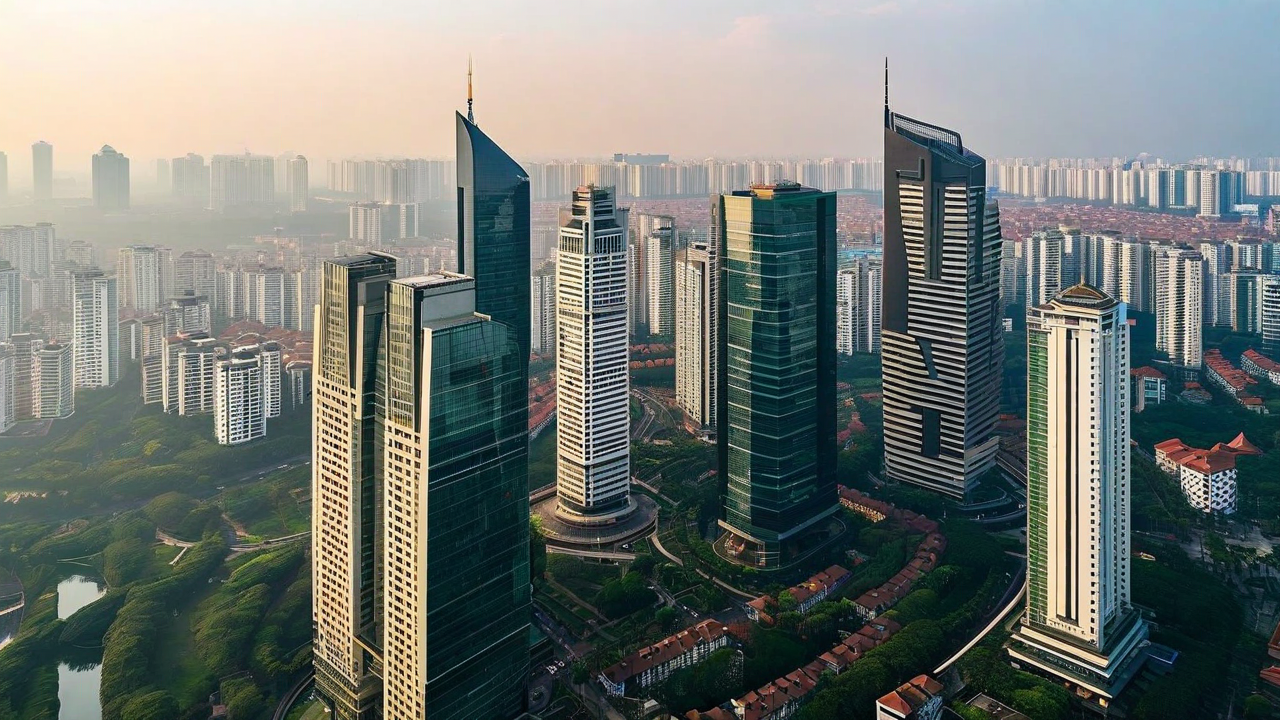
There is a case to be made that Indonesia is the most important single-country technology market in the world outside of China, India, and the United States. With a population of over 270 million, a median age of approximately 29 years, smartphone penetration rapidly approaching 70%, and an economy that was the world's sixteenth largest by GDP before its digital economy even began to approach its potential, Indonesia represents a combination of scale, youth, and growth momentum that is genuinely extraordinary.
The proof is in the outcomes. Indonesia has produced Gojek, Tokopedia (now merged into GoTo), Bukalapak, Traveloka, and several other companies that have achieved unicorn or multi-unicorn valuations. GoTo Group, the combined entity of Gojek and Tokopedia, went public on the Jakarta Stock Exchange in 2022, becoming one of the largest technology IPOs in Southeast Asian history. These exits have created a meaningful pool of wealthy, experienced technology operators who are now reinvesting their capital and experience into the next generation of Indonesian companies.
The Consumer Internet Foundation
Indonesia's technology ecosystem was built on a consumer internet foundation — ride-hailing, e-commerce, food delivery, digital entertainment — that reached scale remarkably quickly given the country's geographical fragmentation. Gojek's achievement of building a multi-service super app across more than 200 cities and 17,000 islands was not merely a business success; it was a proof of concept that the logistics, operations, and technology challenges of serving Indonesia's dispersed population were solvable. Tokopedia's success in building a marketplace where millions of small sellers across the archipelago could reach national consumers similarly demonstrated that the infrastructure for digital commerce could span geographic boundaries that had historically constrained physical commerce.
These consumer-facing successes created secondary opportunities throughout the ecosystem. The explosion of e-commerce created demand for logistics solutions, warehousing, fulfillment, and last-mile delivery services that have spawned entire categories of B2B startups. The growth of digital payments — GoPay, OVO, Dana, LinkAja — created financial data assets that are now being monetized through credit scoring, insurance, and lending products. The development of digital advertising on these platforms created demand for marketing technology, data analytics, and performance measurement tools.
Fintech: Where the Next Phase Begins
Indonesia's fintech opportunity is among the most compelling in the world, for a simple reason: the country has approximately 270 million people and fewer than 80 million bank accounts. The penetration of formal financial services in Indonesia remains dramatically lower than in comparable middle-income economies, not because Indonesians do not need financial services, but because the traditional banking infrastructure was never economically viable to build at the geographic scale and customer economics that would have made universal coverage possible.
Digital financial services are changing this calculus fundamentally. A mobile wallet that can be loaded with cash at a convenience store or through a bank transfer and used to pay for everything from motorcycle rides to groceries no longer requires a physical branch network. A lending platform that assesses credit risk based on mobile behavior, transaction history, and social data rather than formal credit bureau records can extend credit to individuals who would be invisible to traditional underwriters. An insurance product distributed through an e-commerce checkout or delivered in bite-sized weekly premiums is accessible to individuals who could never afford or navigate the process of buying traditional insurance.
Bank Indonesia and the Otoritas Jasa Keuangan, Indonesia's banking and financial services regulators, have been broadly supportive of fintech innovation while maintaining a regulatory framework that protects consumers from the worst abuses. The licensing process for fintech companies can be slow and opaque, but it is navigable, and the regulators have shown willingness to engage with innovative business models and to update their frameworks as the sector evolves. For founders with the patience and the regulatory expertise to navigate the process, an OJK license is a genuine competitive moat that is difficult for international competitors to replicate quickly.
B2B Software and the SME Opportunity
Indonesia has approximately 64 million registered micro, small, and medium enterprises, making it one of the largest SME economies in the world by headcount. These businesses account for roughly 60% of Indonesia's GDP and employ approximately 97% of the workforce. Yet the overwhelming majority of them operate on entirely informal systems — no accounting software, no inventory management, no CRM, no HR platform. The productivity losses from this informality are enormous, both for the individual businesses and for the economy as a whole.
The opportunity to digitize Indonesia's SME economy has attracted a growing number of startups offering affordable, mobile-first business software in Bahasa Indonesia. The challenge is distribution: Indonesia's 64 million SMEs are geographically dispersed, culturally diverse, and accustomed to informal business practices. Selling software to them requires channel strategies that go well beyond digital marketing — partnerships with telcos, banks, trade associations, and government programs have proven essential for companies trying to reach meaningful scale in this segment.
One particularly interesting approach has been the integration of software with financial services. A platform that offers an SME both an accounting tool and the ability to get a working capital loan based on the revenue data generated by that tool creates a compelling value proposition that neither the software nor the credit product could achieve on its own. This bundled approach — sometimes called "software plus services" — is emerging as one of the most effective go-to-market strategies for Indonesian B2B startups targeting the SME segment.
Talent, Education, and the Developer Ecosystem
One of the most important and underappreciated dimensions of Indonesia's technology ecosystem is the development of technical talent. A decade ago, the pool of Indonesian software engineers with experience building scalable consumer internet products was tiny — most of the technical talent at Gojek and Tokopedia in their early days was imported from India, Europe, and North America. Today, Indonesia's own engineering talent pool is orders of magnitude deeper, and initiatives by the government, by large technology companies, and by a new generation of coding bootcamps and online education platforms are accelerating its development.
Platforms like Dicoding, Hacktiv8, and RevoU are training thousands of Indonesian engineers, data scientists, and product managers each year, creating a pipeline of technically skilled workers who understand Indonesian market nuances in ways that foreign talent cannot easily replicate. This talent development is a critical enabler for the next generation of Indonesian technology companies, which are increasingly competing for technical talent not just with domestic firms but with the global tech companies that have established engineering offices in Jakarta.
The Jakarta-Outer Island Dynamic
One of the most interesting dynamics in Indonesia's technology ecosystem is the relationship between Jakarta and the rest of the country. Jakarta concentrates an enormous share of the country's startup activity, venture capital, and technical talent, but it represents less than 5% of Indonesia's total population. The 95% of Indonesians who live outside of Jakarta are increasingly connected to the digital economy but are often underserved by products designed with the Jakarta consumer — typically young, educated, and relatively affluent — in mind.
Founders who take the time to understand the needs, behaviors, and economic realities of consumers and businesses in Surabaya, Medan, Makassar, and the hundreds of smaller cities and towns across the archipelago can access markets that are largely ignored by the major platforms and can build businesses with far less competitive pressure than they would face in Jakarta. The winners in Indonesian technology over the next decade will not simply be companies that extend Jakarta-designed products to the outer islands — they will be companies that design for the outer islands from the start and use those less competitive markets as a foundation for growth.
Key Takeaways
- Indonesia's GoTo IPO and unicorn pipeline have validated the market and recycled capital and talent into the next generation of startups.
- With fewer than 80M bank accounts for 270M people, Indonesia's fintech opportunity is among the most structurally compelling globally.
- 64 million SMEs operating on informal systems represent an enormous B2B software opportunity for mobile-first, Bahasa Indonesia-native products.
- Local technical talent is growing rapidly, reducing dependence on foreign engineering talent and deepening the ecosystem's long-term capabilities.
- Outer-island markets remain significantly underserved, rewarding founders who design for Indonesia's geographic and demographic diversity from day one.